
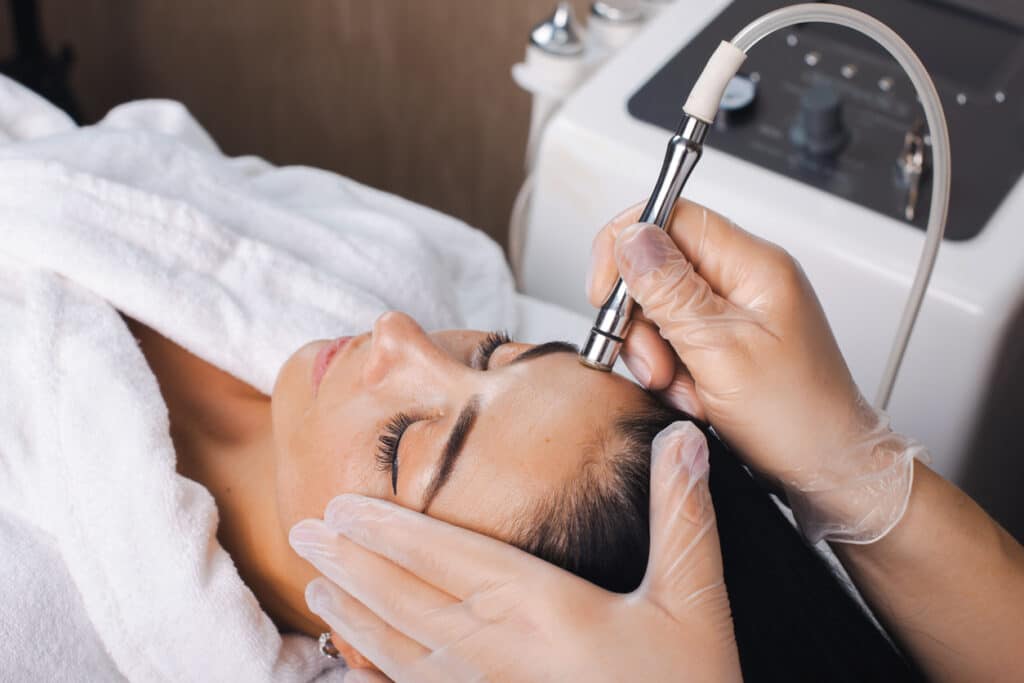
Dead skin cells can collect on the surface of your face, making your complexion appear dull, uneven, or rough. Microdermabrasion is a noninvasive exfoliating treatment that removes some of this outer buildup without chemicals, needles, or surgical incisions.
Professional microdermabrasion is part of the cosmetic dermatology care available through West Virginia Dermatology & Skin Surgery Center. The practice has locations in South Charleston, Barboursville and Beckley, West Virginia, and is led by board-certified dermatologist Dr. David W. Judy. Our team can evaluate your skin before treatment and explain where microdermabrasion fits within your current routine.
How Does Microdermabrasion Work?
Microdermabrasion uses a handheld device to gently remove the uppermost layer of dead skin cells. Depending on the equipment used, the device may pass a textured tip across the skin or release fine particles. Suction removes the loosened cells and surface debris.
The treatment affects only the outer layer of the skin, which is why recovery is generally brief. Unlike a chemical peel, microdermabrasion relies on controlled physical exfoliation rather than an acid solution.
What Can Microdermabrasion Improve?
After treatment, the skin may look smoother, brighter, and more even. Microdermabrasion can be considered for concerns such as:
Dull skin
Rough surface texture
Mild uneven coloring
Fine facial lines
Congested pores
Superficial age spots
Microdermabrasion doesn’t rebuild lost facial volume, tighten significant laxity, or remove deep wrinkles. It also doesn’t correct depressed acne scars, though improving surface tone can complement other acne scar treatments.
A consultation helps determine whether the concern lies close enough to the skin’s surface for this form of exfoliation to be useful.
What Does Treatment Feel Like?
Most people describe microdermabrasion as a mild scratching, sanding, or vibrating sensation. The suction may create a gentle pulling feeling as the device moves across the treatment area.
A session generally doesn’t require anesthesia. Your skin may look pink or feel slightly tender, tight, or dry afterward. These temporary changes tend to be mild because the treatment doesn’t penetrate deeply.
Follow the skin care instructions given by the practice. A gentle cleanser, moisturizer, and broad-spectrum sunscreen may be recommended while the surface settles. Avoid aggressive scrubs and unapproved exfoliating products after treatment.
How Many Microdermabrasion Sessions Will You Need?
Some people notice smoother skin after one visit, but a series may be suggested for progressive changes in tone or texture. The number and spacing of treatments depend on your skin’s response and the issue being treated.
Microdermabrasion can also be scheduled periodically as part of a maintenance routine. More frequent care isn’t always better, since over-exfoliation can irritate the skin barrier.
Your provider may recommend another service when pigment, scarring, redness, or texture changes extend deeper into the skin.
Why Choose West Virginia Dermatology & Skin Surgery Center for Microdermabrasion in South Charleston?
A facial exfoliation treatment still requires an understanding of skin health. Active rashes, infections, open sores, inflamed acne, rosacea flares, and recent procedures can affect when microdermabrasion should be performed.
West Virginia Dermatology & Skin Surgery Center is led by a board-certified dermatologist and treats both medical and cosmetic concerns. This setting allows our team to distinguish routine surface buildup from a condition that needs medical care or another cosmetic treatment.
Polish Away Dull Surface Buildup
Microdermabrasion may be a practical choice when your skin needs gentle, nonchemical exfoliation. Call (304) 925-7546 or contact us to request an appointment with West Virginia Dermatology & Skin Surgery Center in South Charleston, WV.